
Why Buttonbush is the Ultimate Solution for Soggy Yards
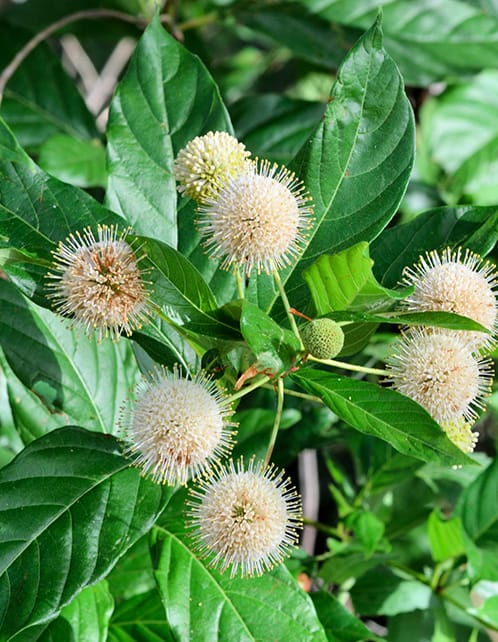
If you own an old house, you almost certainly have a soggy spot.
Maybe it is a depression at the back of the property where the neighborhood runoff gathers. Maybe it is right at the end of a gutter downspout where the grading has slowly settled toward the foundation over the past century. Whatever the cause, you have probably tried to plant grass there and watched it turn to muck. Then you might have tried to plant a fussy and expensive ornamental shrub only to watch it drown.
Stop fighting the water. It is time to embrace it.
Enter the Buttonbush (Cephalanthus occidentalis). This native powerhouse does not just tolerate wet feet. It demands them.
What is Buttonbush?
Buttonbush is a deciduous shrub native to North America. It is typically found growing wild in swamps, floodplains, and along the muddy banks of ponds.
In a residential landscape, it typically grows into a rounded shrub with multiple stems reaching about 6 to 12 feet tall and wide. It has glossy and dark green leaves that look incredibly lush. However, its true claim to fame is its flowers.
In mid to late summer, Buttonbush erupts in perfectly spherical and spiky white flowers that look like tiny glowing satellites or exploding fireworks. They are completely unique, incredibly fragrant, and look stunning against the backdrop of an older historic home.
Why It is the Ultimate Problem Solver Plant
Older properties often come with outdated drainage infrastructure and compacted soils that do not percolate well. Here is why Buttonbush is the perfect solution:
-
It loves standing water: Most landscape plants suffer from root rot in poorly drained soil. Buttonbush actually thrives in it. It can literally grow in up to three feet of standing water.
-
It anchors rain gardens: You might be building a rain garden or a bioswale to manage stormwater runoff. This is a highly recommended upgrade for historic properties. Buttonbush is the perfect deep rooted anchor plant to stabilize the soil and drink up excess moisture.
-
It requires low maintenance: Once established in a wet spot, it needs virtually zero supplemental watering or babying.
An Ecological Heavy Hitter
When you plant Buttonbush, you are not just fixing a landscaping headache. You are setting up an incredible buffet for local wildlife.
Those quirky and geometric flowers are rich in nectar. On a sunny July afternoon, a single Buttonbush will be absolutely vibrating with life. It is a magnet for swallowtail butterflies, native bees, and hummingbirds.
Even better, the architectural interest lasts into the winter. The flowers give way to hard and reddish brown seed heads that persist on the bare branches through the snow. This provides a vital winter food source for waterfowl and songbirds.
How to Plant and Care for Buttonbush
Are you ready to turn your swampy corner into a focal point? Here is what you need to know:
-
Sunlight: Buttonbush prefers full sun to part shade. It will survive in heavier shade, but you will not get those spectacular floral displays.
-
Soil: The wetter the soil, the better. It adapts to loamy or clay soils easily as long as it never completely dries out. Do not plant this in a high, dry, or sandy spot.
-
Pruning: Buttonbush blooms on new wood, which is the current season of growth. If your shrub gets a little too wild or leggy for your garden aesthetic, you can prune it back hard in late winter or early spring without sacrificing the summer blooms.
Stop Fighting Your Yard
Part of the charm of owning an older property is learning to work with its quirks rather than against them. If you have a spot in your yard that feels more like a bog than a lawn, let it be a bog. Plant a Buttonbush, put away the grass seed, and get ready to watch the butterflies roll in.