
Rose of Sharon vs. Crape Myrtle: Which Summer Bloomer Belongs in Your Yard?
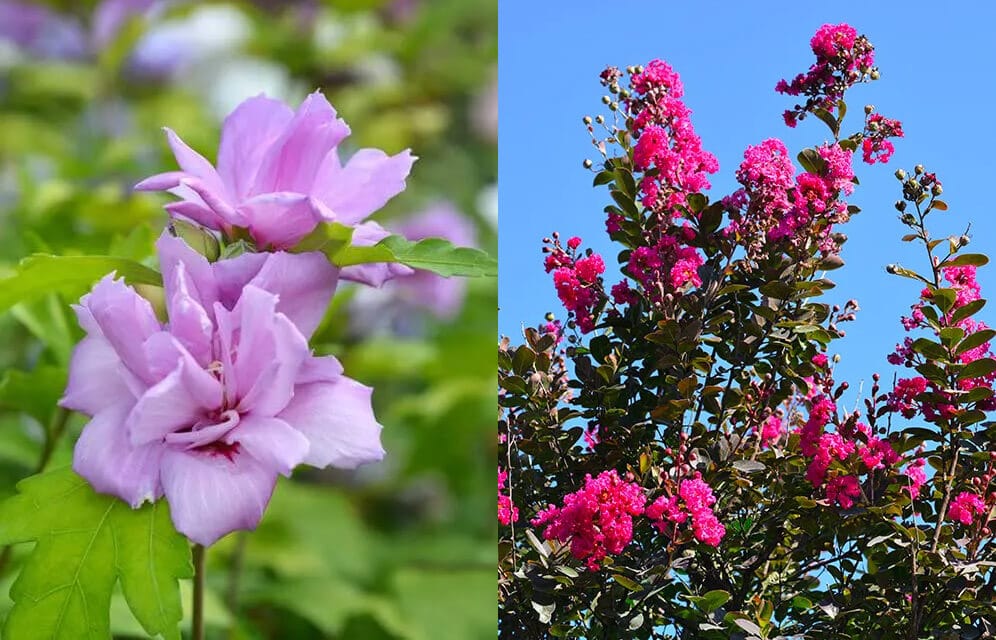
When summer arrives and most of the spring bloomers have taken their bow, two plants keep the color going better than almost anything else in the landscape: Rose of Sharon and Crape Myrtle. Both are summer staples in Southern gardens. Both are tough, reliable, and genuinely beautiful. And if you’ve been trying to decide between them, you’re not alone.
The good news is that there’s no wrong answer here. But there is a right answer for your yard, depending on what you’re working with and what you’re hoping to achieve. Let’s take a close look at both plants so you can make the call with confidence.
Meet the Contenders
Rose of Sharon
Rose of Sharon (Hibiscus syriacus) is a deciduous shrub that has been gracing American gardens for centuries. Despite its exotic sounding name, it’s actually an incredibly tough and adaptable plant that thrives in a wide range of conditions. It produces large, showy, hibiscus-like blooms in shades of pink, white, purple, red, and bicolor combinations, and it does so reliably from midsummer well into fall when many other plants are struggling in the heat.
One of our favorites is the Red Rose of Sharon (Hibiscus syriacus ‘Amplissimus’), which produces an abundance of large, dark pink blooms with a striking red eye at the center. It’s one of those plants that genuinely turns heads.
Crape Myrtle
Crape Myrtle (Lagerstroemia indica) is often called the Queen of the Summer Garden, and for good reason. It produces massive clusters of crinkled, crepe paper-like flowers in vivid shades of pink, red, lavender, and white, and it blooms from midsummer all the way into autumn. Even after the flowers fade, the Crape Myrtle offers gorgeous exfoliating bark in cinnamon tones that make it a standout in the winter landscape as well.
We carry pink, red, and purple Crape Myrtles at Old House Trees, giving you plenty of options to match your landscape’s color palette.
How They Compare
Size and Form
This is one of the biggest practical differences between the two plants.
Rose of Sharon grows in an upright, vase-shaped form and typically reaches 8 to 12 feet tall. It stays relatively narrow, which makes it well suited for tighter spots, privacy screens, and hedges where you need height without a lot of spread.
Crape Myrtle varies more widely depending on the variety. Shrub forms stay compact and manageable, while tree forms can easily reach 15 to 25 feet or more. The multi-stemmed, spreading habit of a mature Crape Myrtle gives it more of a canopy effect, which works beautifully as a specimen tree or along a driveway.
Choose Rose of Sharon if you have a narrower space or want to create a living screen or hedge with vertical structure.
Choose Crape Myrtle if you have more open space and want a dramatic focal point or shade-producing specimen tree.
Bloom Time and Duration
Both plants bloom in summer, but there are some differences worth knowing.
Rose of Sharon typically begins blooming in midsummer and continues reliably through early fall. The individual flowers are large and trumpet-shaped, and each one only lasts a day or two, but the plant produces so many buds that the overall display stays full and colorful for months.
Crape Myrtle also blooms from midsummer through fall and produces its flowers in large, showy clusters called panicles. The display tends to be bolder and more dramatic overall, covering the entire tree in color at peak bloom.
For long, reliable color: Both are excellent. If you want individual flower size, go with Rose of Sharon. If you want the biggest overall bloom impact, go with Crape Myrtle.
Sun and Soil Requirements
Rose of Sharon is the more flexible of the two when it comes to light. It performs beautifully in full sun but will also tolerate partial shade, making it one of the better options for spots that don’t get direct sun all day long. It adapts to a wide range of soil types as long as drainage is reasonable.
Crape Myrtle is a full sun plant through and through. It needs at least six hours of direct sun per day to bloom its best, and shady conditions will significantly reduce flower production and can increase the risk of powdery mildew. It also thrives in heat and is extremely drought tolerant once established.
Choose Rose of Sharon if your planting spot gets partial shade during the day.
Choose Crape Myrtle if you have a hot, sunny, open location where other plants struggle.
Cold Hardiness
Rose of Sharon is the clear winner here. It is cold hardy through USDA Zone 5, which means it performs reliably across a much wider geographic range, including areas with harsh winters where Crape Myrtles simply won’t survive.
Crape Myrtle is best suited for Zones 6 through 9. In Zone 6, some dieback may occur in harsh winters, but established plants typically rebound from the roots in spring. In Zone 7 and warmer, they are virtually bulletproof.
If you’re in Tennessee or the deep South, cold hardiness is rarely a concern for either plant. But if you’re in a colder region, Rose of Sharon is the safer bet.
Wildlife and Pollinator Value
Rose of Sharon is a magnet for pollinators. The large, open flowers are perfectly shaped for bees, butterflies, and hummingbirds, and the plant blooms during a time of year when many other nectar sources have faded. If supporting local wildlife is a priority for your garden, Rose of Sharon earns high marks.
Crape Myrtle also attracts pollinators, particularly bees that are drawn to the abundant pollen. However, it doesn’t provide quite the same level of wildlife value as Rose of Sharon, particularly for hummingbirds.
For pollinators and wildlife: Rose of Sharon has the edge.
Maintenance
Both plants are considered low maintenance, but they have slightly different care needs.
Rose of Sharon benefits from light pruning in late winter or early spring to encourage dense, full growth and abundant blooms. It can also self-seed fairly prolifically, so deadheading spent flowers or choosing a sterile variety can help keep volunteers in check.
Crape Myrtle is famously low maintenance, but it does suffer from one common mistake: improper pruning, often called crape murder. Topping a Crape Myrtle destroys its natural form and reduces blooming. The right approach is to prune lightly in late winter, removing only crossing or dead branches and allowing the tree to keep its graceful natural shape.
Side by Side
| Feature | Rose of Sharon | Crape Myrtle |
| Size | 8 to 12 feet tall, narrow | Varies; shrub to 25 feet |
| Form | Upright, vase-shaped | Multi-stemmed, spreading |
| Bloom time | Midsummer through fall | Midsummer through fall |
| Sun needs | Full sun to partial shade | Full sun required |
| Cold hardiness | Zone 5 and warmer | Zone 6 and warmer |
| Pollinator value | Excellent | Good |
| Best use | Hedge, screen, border | Specimen, driveway, focal point |
| Winter interest | Minimal | Excellent bark color and form |
So Which One Should You Choose?
Here’s a simple way to think about it.
Choose Rose of Sharon if:
- Your planting spot gets some shade during the day
- You want to create a privacy screen or informal hedge
- Attracting hummingbirds and butterflies is a priority
- You live in a colder climate
Choose Crape Myrtle if:
- You have a hot, sunny, open location
- You want a dramatic specimen or focal point tree
- You love the idea of ornamental bark and winter interest
- You want the biggest, boldest bloom display possible
Choose both if:
- You have the space and want summer color from multiple angles. Rose of Sharon along a fence or border pairs beautifully with a Crape Myrtle as a centerpiece tree. Together, they cover a lot of ground and create a layered, lush landscape that peaks right when the summer heat is at its worst.
Shop Both at Old House Trees
At Old House Trees, we carry both Rose of Sharon and Crape Myrtle in healthy, well-established sizes, ready to ship directly to your door. Whether you’ve made your decision or you’re still weighing your options, we’d love to help you find exactly what your yard is looking for.