
How to Use Shirobana Spirea for Year-Round Color and Texture
Most shrubs get their moment in the spotlight and then fade quietly into the background for the rest of the year. Shirobana spirea is different. This compact, easygoing shrub manages to bring something interesting to the garden in nearly every season, from its famous multi-colored blooms in summer to its fiery foliage in fall and its fine-textured structure in winter.
If you’re looking for a shrub that earns its place in the landscape all year long, Shirobana spirea deserves a closer look. Here’s how to make the most of it.
Spring: Fresh Foliage and Early Structure
As the garden wakes up in spring, Shirobana spirea pushes out small, bright green leaves that quickly fill in its naturally rounded, mounding shape. Even before any flowers appear, the shrub provides a soft, fine-textured backdrop that contrasts nicely with bolder, broad-leaved plants nearby.
This is also the best time to do any shaping or light pruning, since spirea blooms on new growth. A quick trim in early spring encourages denser growth and sets the stage for a fuller flush of blooms later on.
Year-round tip: Use Shirobana spirea as a low, mounding edge along a pathway or border. Its tidy spring growth creates a clean, green frame for taller plants behind it.
Summer: The Star of the Show
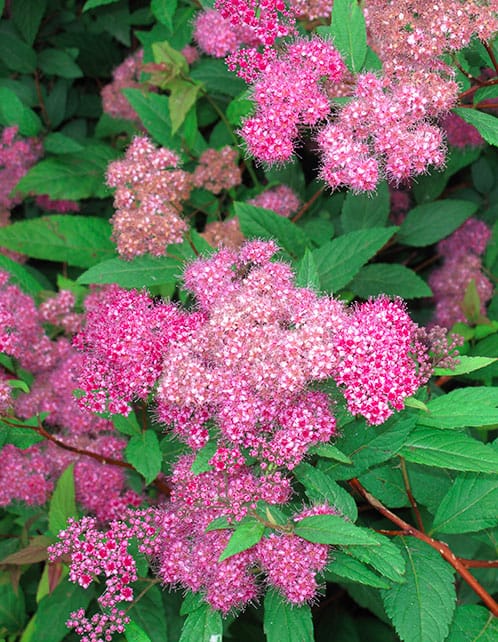
This is where Shirobana spirea truly shines. Unlike most flowering shrubs that produce blooms in a single color, Shirobana puts on a show with pink, white, and rose pink flowers, often appearing on the same shrub at the same time. The effect is almost like the plant can’t decide what color it wants to be, and the result is a soft, speckled, confetti-like display that’s hard to find anywhere else.
The blooms typically appear in late spring and continue into summer. If you deadhead the spent flowers after the first big flush, many Shirobana spireas will rebloom later in the season, giving you a second wave of color when many other shrubs have already finished.
Year-round tip: Plant Shirobana spirea where you’ll see it often, near a patio, along a walkway, or beneath a window, so you can enjoy the unusual bloom color up close all summer long.
Fall: A Foliage Finale
As temperatures cool, Shirobana spirea transitions into its fall phase, with foliage that often shifts toward warm orange, copper, and reddish tones. This fall color adds a final burst of interest just as many summer blooms are fading, helping extend the garden’s color season well into autumn.
Because the shrub stays relatively small and tidy, this fall color reads less like a single dramatic statement and more like a soft glow throughout the landscape, especially when several plants are grouped together.
Year-round tip: Pair Shirobana spirea with evergreens nearby. The contrast between the spirea’s warm fall foliage and the steady green of evergreen shrubs makes both look more vibrant.
Winter: Quiet Structure and Texture
Once the leaves drop, Shirobana spirea doesn’t disappear from the landscape. Its fine, twiggy branching structure and naturally rounded form provide subtle texture through the winter months, especially valuable in gardens that can otherwise feel flat and bare this time of year.
Because it stays compact (typically 2 to 3 feet tall and wide) it won’t overwhelm a winter garden, but it adds just enough form to keep beds and borders from looking empty.
Year-round tip: Use Shirobana spirea in groupings of three or more for winter. The repeated rounded shapes create a sense of rhythm in the garden, even without any leaves or flowers.
Designing With Shirobana Spirea Year-Round
To get the most out of this shrub across all four seasons, consider a few design principles.
Plant in groups for impact. A single Shirobana spirea is lovely, but planting in odd-numbered groups (three or five) creates a fuller, more cohesive look, especially during bloom season when the multi-colored flowers can really stand out.
Combine with plants that peak at different times. Since Shirobana spirea is busiest in summer and fall, pair it with spring-blooming bulbs or early perennials to fill gaps before the spirea takes center stage.
Use it as a unifying element. Because its compact size and rounded form work in so many garden styles, Shirobana spirea can tie together mixed borders, foundation plantings, and even container gardens without competing for attention.
Lean into its low maintenance nature. Shirobana spirea is deer resistant, drought tolerant once established, and doesn’t require frequent feeding or spraying. That makes it an easy shrub to fold into a low maintenance, year-round planting plan.
A Shrub That Works as Hard as You Do
Few shrubs offer this much variety from a single plant. Shirobana spirea moves through the seasons with fresh spring foliage, an unforgettable multi-colored summer bloom, warm fall color, and a tidy winter form, all while asking very little in return.
If your garden has a spot that needs year-round interest without year-round upkeep, Shirobana spirea might be exactly what you’re looking for.
Bring Shirobana Spirea Home
At Old House Trees, we carry healthy, well-established Shirobana spirea ready to settle into your landscape and start putting on a show. Whether you’re filling out a border, framing a walkway, or adding a pop of unexpected color to your garden, this is one shrub that delivers all year long.