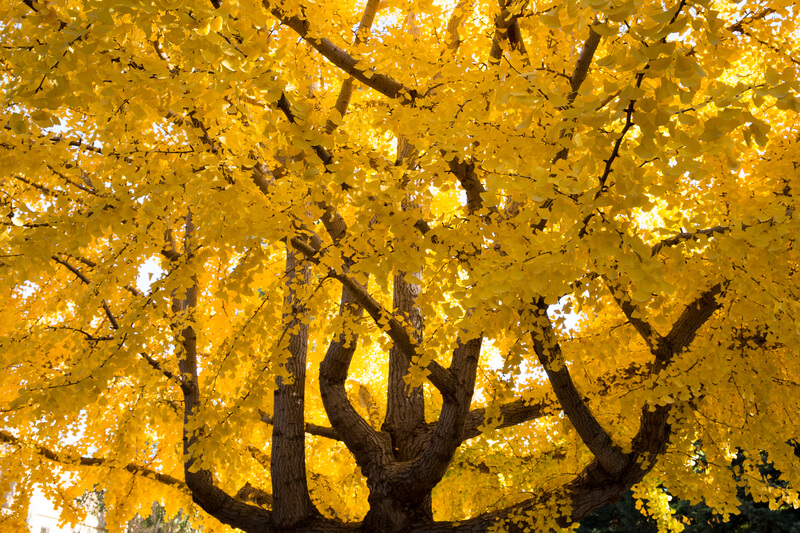
Few shade trees carry the prestige, history, and pure visual impact of the Ginkgo (Ginkgo biloba). Often referred to as a “living fossil,” the ginkgo is the sole surviving species of an ancient order of plants that thrived during the era of the dinosaurs over 200 million years ago.
Known for their distinct fan-shaped leaves, resistance to urban pollution, and breathtaking saffron-yellow fall display, Ginkgos are among the most resilient shade trees you can plant. Here is your complete guide to growing and caring for a ginkgo tree from Old House Trees.
Key Fast Facts
Plant Requirements & Growing Conditions
1. Sunlight
Ginkgoes thrive in full sun. While young saplings can tolerate partial shade, establishing your tree in a bright,unobstructed area ensures optimal canopy growth and vibrant autumn foliage.
2. Soil & Drainage
The Ginkgo is extraordinarily adaptable to various soil types, including sandy, loamy, or heavy clay soils. Its primary requirement is good drainage. While it tolerates acidic to alkaline pH ranges (5.0 to 8.0) and compacted urban soils,prolonged standing water can cause root rot.
3. Watering Needs
-
Establishment Period (Years 1–2): Water deep once or twice a week during dry periods. Keep the soil moist around the root zone, but never waterlogged.
-
Mature Trees: Once established, ginkgoes are remarkably drought-tolerant and rarely require supplemental watering except during severe heatwaves.
Step-by-Step Planting & Early Care Guide
Allow plenty of overhead clearance
Choose a spot far enough from structures and power lines to accommodate a mature canopy width of 30 to 40 feet. Ensure full sun exposure.
Focus on width rather than depth
Dig a hole 2 to 3 times wider than the root ball, but keep the depth identical to the container’s soil level. The root flare (where the trunk widens at the ground) should sit slightly above the surrounding grade.
3. PLANTING AND BACKFILLING
Avoid heavy soil amendments
Place the tree straight in the hole, firming native soil around the base to eliminate air pockets. Water deeply immediately after planting to settle the roots.
4. MULCHING AND TRUNK CARE
Apply a 3-inch layer of organic wood mulch extending out to the drip line. Keep mulch 2 to 3 inches away from the trunk base to prevent bark decay and rodent nesting.
Pruning and Seasonal Maintenance
-
Pruning Window: Prune in late winter or early spring while the tree is dormant.
-
Structure: Young ginkgoes can grow in somewhat erratic, open patterns before filling out. Avoid over-pruning young trees; focus only on removing dead, damaged, or rubbing branches, as well as suckers sprouting from the base.
-
The Famous Ginkgo Leaf Drop: Unlike trees that drop leaves slowly over several weeks, ginkgoes are famous for shedding their entire canopy almost overnight following the first hard freeze, creating a brilliant golden carpet around the base.