
Colorado Blue Spruce vs. Norway Spruce
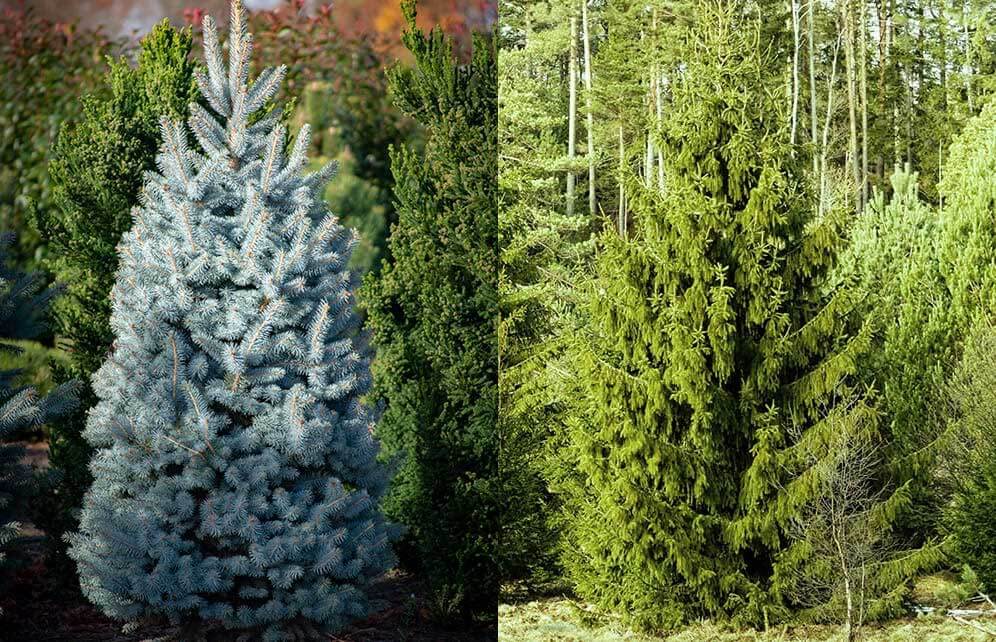
Choosing between a Colorado Blue Spruce (Picea pungens) and a Norway Spruce (Picea abies) is one of the most common dilemmas for homeowners looking to plant large evergreen conifers. Both species deliver year-round structure, privacy screening, and classic evergreen beauty. However, differences in growth rate, needle color, and disease resistance mean one is likely a much better fit for your specific landscape.
Quick Comparison: Colorado Blue Spruce vs. Norway Spruce
For a fast summary of how these two spruces stack up, here is a breakdown of their primary traits:
Key Differences Detailed
1. Foliage Color and Visual Aesthetics
-
Colorado Blue Spruce: Famous for its stiff, sharp, silvery-blue needles. It makes an eye-catching statement when planted as a standalone accent tree in front yards or expansive lawns.
-
Norway Spruce: Displays dark, glossy green needles along pendulous weeping branchlets that give mature trees a graceful, classic silhouette.
2. Growth Speed and Mature Size
-
Colorado Blue Spruce: Grows at a moderate pace, making it easier to manage in medium-sized residential yards over its first few decades.
-
Norway Spruce: One of the fastest-growing spruces available. If you need a fast windbreak or privacy row to block neighbors or road noise, Norway spruce fills in space much faster.
3. Climate Adaptation and Tree Health
-
Colorado Blue Spruce: Native to the dry Rocky Mountain region, it struggles in hot, humid summers. In humid eastern and southern zones, it frequently develops fungal issues like Rhizosphaera needle cast, which causes inner needles to turn purple and drop.
-
Norway Spruce: Native to Northern and Central Europe, it shows exceptional adaptability to varied soil types, heavy clay, and humid summer air, maintaining full foliage near the base for decades.
Which Spruce Should You Choose?
-
Choose the Colorado Blue Spruce if you live in a drier or cooler climate (or a well-ventilated location), have a smaller yard, and want a vibrant blue focal point to anchor your garden design.
-
Choose the Norway Spruce if you live in an area with hot or humid summers, need a dense privacy hedge or windbreak built quickly, or want a hardy tree that requires minimal long-term maintenance.