
A Brief History of Sweetshrub
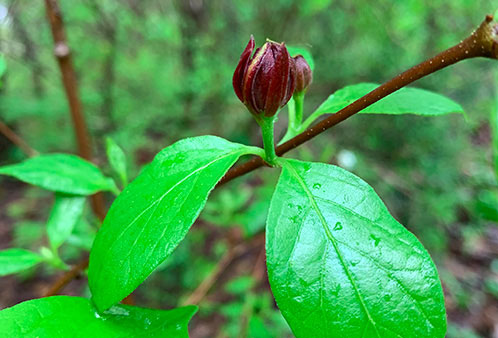
Sweetshrub, scientifically known as Calycanthus, is a charming and fragrant shrub with a fascinating history:
Ancient Roots: The history of sweetshrub began in ancient times when indigenous peoples in North America used it. Native American tribes such as the Cherokee and Choctaw used sweetshrub for medicinal and aromatic purposes. They made use of its fragrant bark, leaves, and twigs for various remedies.
Botanical Discovery: Sweetshrub caught the attention of European botanists in the late 18th century. The French botanist André Michaux, who was exploring the southeastern United States, encountered this unique plant with aromatic, maroon-colored flowers. He named it Calycanthus floridus, with “Calycanthus” meaning “beautiful flower” in Greek.
Horticultural Introduction: Calycanthus floridus made its way to European botanical gardens in the late 18th century. It quickly gained popularity due to its attractive, sweet-smelling blooms. Gardeners admired its unique fragrance and ornamental qualities.
Common Names: Sweetshrub is known by various common names, including “Carolina allspice” and “strawberry shrub” due to the sweet, fruity scent of its flowers. The plant’s aromatic qualities made it a favorite among gardeners and perfumers.
Cultivation in Gardens: By the 19th century, sweetshrub became a prized ornamental plant in American gardens. Its distinctive, maroon flowers and delightful fragrance made it a sought-after addition to landscape designs. It was particularly popular in the southern United States.
Linnaeus and Evolutionary History: In botany, sweetshrub also played a role in understanding plant evolution. Carl Linnaeus, the father of modern taxonomy, used sweetshrub as a case study to explore the relationships between plant species. Sweetshrub’s primitive characteristics, such as its spirally arranged floral parts, provided insights into the evolutionary history of flowering plants.
Modern Uses: Today, sweetshrub continues to be a beloved garden plant. Its fragrant flowers are prized for their sweet, fruity scent, which is reminiscent of strawberries, spices, and even bubblegum. Sweetshrub’s versatility makes it suitable for various landscape designs, from cottage gardens to native plantings.
Recent
- The “Late Summer Legend”: Why You Need a Rose of Sharon
- Meet the Arrowwood Viburnum: The “Swiss Army Knife” of Your Garden
- Why Every Garden Needs a Pussy Willow (Your Local Bees Will Thank You!)
- Bring Home the “King of the North Woods”: Why the Eastern White Pine is Your Next Landscape Essential
- Winter Wellness for Your Potted Plants